
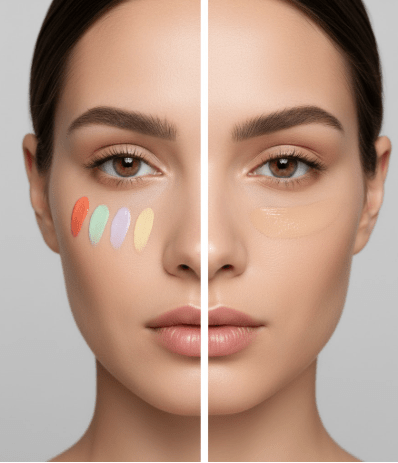
If you struggle with dark circles, blemishes, pigmentation, or redness, you’ve probably wondered:
Should I apply concealer or colour corrector first?
The truth is—both products serve different purposes, and using them in the right order can completely transform the way your makeup looks. This guide breaks down the difference between the two and explains exactly which one goes first for a flawless, even complexion.
What Is a Colour Corrector?
A colour corrector is a tinted product that neutralizes unwanted tones in the skin.
It works based on colour theory—opposite colours cancel each other out.
Common Types of Colour Correctors
-
Peach/Orange: Cancels dark circles on medium to deep skin
-
Yellow: Brightens dullness
-
Green: Cancels redness (acne, rosacea, irritation)
-
Lavender/Purple: Neutralizes yellow, sallow tones
Purpose: Neutralize discoloration before adding concealer or foundation.
What Is a Concealer?
A concealer hides or brightens areas of the face.
It sits on top of the skin to cover imperfections rather than neutralizing them.
Types of Concealers
-
Full-coverage (hides blemishes + dark circles)
-
Brightening (highlights under the eyes)
-
Creamy (natural finish)
-
Matte (long-lasting and oil-control)
Purpose: Cover, brighten, and blend seamlessly into your makeup.
So… Which Comes First?
✔️ Colour Corrector Comes FIRST.
✔️ Concealer Goes SECOND.
Here’s why:
Colour correctors neutralize discoloration.
Concealers cover and brighten the neutralized area.
If you use concealer first, the corrector can mix in and turn muddy.
When used correctly, the two products work together to create a smooth, even base.
Step-by-Step: How to Apply Colour Corrector + Concealer
1. Prep Your Skin
Apply moisturizer and primer so your under-eye or blemish area is smooth and hydrated.
2. Apply a Thin Layer of Colour Corrector
Tap lightly with your finger or a small makeup sponge.
You only need a very small amount—think “just enough to cancel the colour.”
3. Add Concealer on Top
Pat (don’t drag) the concealer over the corrected area.
This blends everything and restores your natural skin tone.
4. Blend Well
A damp beauty sponge gives the most seamless finish.
5. Set With Powder (Optional but Recommended)
Especially under the eyes or on blemishes, setting powder helps prevent creasing and sliding.
Which Corrector Should You Use for Your Skin Tone?
Fair Skin
-
Peach corrector for blue/purple under eyes
-
Green for redness
Medium Skin
-
Deep peach or orange for dark circles
-
Yellow for dullness
Deep Skin
-
Orange or red-orange for stubborn dark circles
-
Green for redness around the mouth or cheeks
When You Don’t Need a Colour Corrector
Use only concealer if:
-
Your dark circles are mild
-
You have light redness
-
You want a quick everyday routine
-
You use a full-coverage concealer that hides everything already
Final Thoughts
Colour correctors and concealers are both powerful tools—but when used in the right order, they give you a smooth, flawless complexion without looking cakey or heavy.
Always apply colour corrector first, then concealer second, and finish with powder for long-lasting perfection.