
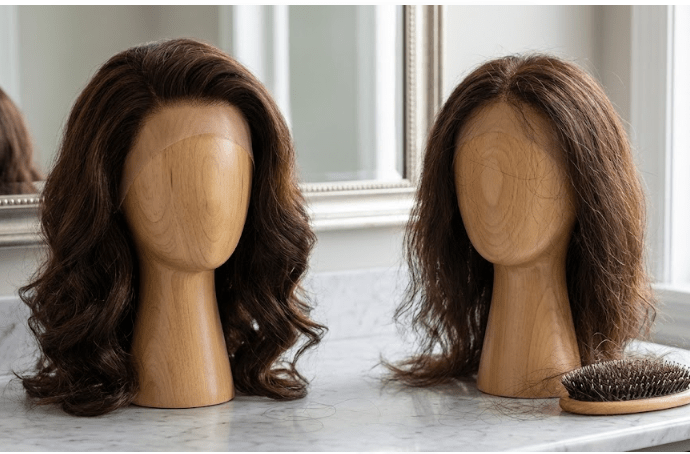
If your wig looked full and flawless when you first bought it but now appears thinner after just a few wears, you’re not alone. Many wig wearers notice a loss of density over time—and while it can be disappointing, it’s often preventable.
Let’s break down why wigs look thinner over time and what you can do to keep yours looking fresh and full.
1. Natural Shedding Is Normal
Just like natural hair, wigs shed—especially lace front and hand-tied wigs.
Why it happens:
-
Ventilated knots loosen over time
-
Regular brushing and styling pull strands out
What to know:
A small amount of shedding is normal, but excessive shedding points to handling or care issues.
2. Over-Brushing & Rough Detangling
Aggressive brushing is one of the biggest reasons wigs lose density.
Common mistakes:
-
Brushing when the wig is dry and tangled
-
Starting from the roots instead of the ends
-
Using the wrong brush or comb
Fix:
Always detangle gently, starting at the ends and working upward with a wig-friendly brush.
3. Heat Styling Weakens Hair Fibres
Frequent heat styling—especially on synthetic wigs—can thin out hair over time.
Why heat causes thinning:
-
Melts or frays synthetic fibres
-
Dries out human hair wigs, leading to breakage
Prevention tips:
-
Use heat protectant on human hair wigs
-
Keep tools on low heat
-
Avoid daily heat styling
4. Product Build up Weighs Hair Down
Heavy styling products can make wigs look thinner even when hair hasn’t shed.
Culprits include:
Solution:
Wash your wig regularly to remove build up and restore bounce.
5. Improper Washing Techniques
Washing your wig the wrong way can loosen knots and increase shedding.
Avoid:
-
Scrubbing or twisting the wig
-
Hot water
-
Regular shampoos with sulfates
Do instead:
-
Gently soak
-
Use wig-safe or sulfate-free shampoo
-
Pat dry with a towel
6. Lace Damage at the Hairline
Thinning at the front often comes from lace damage.
Common causes:
-
Rough glue removal
-
Pulling the wig off forcefully
-
Excess adhesive build up
Protect your lace to protect your density.
7. Friction From Daily Wear
Daily use causes friction that leads to gradual thinning.
High-friction areas:
-
Nape of the neck
-
Behind the ears
-
Crown area
Sleeping, clothing collars, and scarves all contribute to fibre loss.
8. Wig Density Choice Matters
Some wigs are intentionally low density for a natural look.
What to consider:
-
Low-density wigs show wear faster
-
Higher density wigs maintain fullness longer
Choosing the right density for your lifestyle makes a big difference.
How to Prevent Your Wig From Looking Thin
-
Detangle gently and less often
-
Limit heat styling
-
Wash only when needed
-
Use lightweight products
-
Store wigs on a stand
-
Rotate wigs instead of wearing one daily
Final Thoughts
A wig looking thinner after a few wears doesn’t mean it’s ruined—it means it needs better care. With gentle handling, proper washing, and smart styling habits, your wig can stay full, natural, and beautiful much longer.