
Chemical treatments like colouring, bleaching, relaxing, and perming can completely transform your hair—but they also change its structure in ways many people don’t fully understand. If you’ve ever noticed dryness, breakage, or texture changes after a chemical service, there’s a scientific reason behind it.
Let’s break down what actually happens to your hair after chemical processing, and how to care for it properly.
Understanding Hair’s Natural Structure
Each strand of hair is made up of three main layers:
-
Cuticle – The outer protective layer
-
Cortex – The middle layer that gives hair strength, color, and elasticity
-
Medulla – The inner core (not present in all hair types)
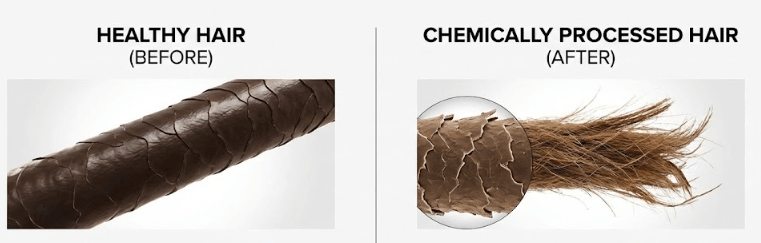
Healthy hair has tightly closed cuticles that protect the cortex.
How Chemical Processing Affects Hair
Chemical treatments work by opening the cuticle to alter the cortex.
1. Cuticle Lifts and Weakens
During processing:
-
The cuticle scales open
-
Hair becomes more porous
-
Moisture escapes more easily
Once lifted, cuticles may not fully close again—leading to ongoing dryness.
2. Bonds Inside the Hair Are Broken
Hair strength depends on internal bonds:
-
Disulfide bonds (strongest)
-
Salt bonds
-
Hydrogen bonds
Chemical treatments break or reshape these bonds to change colour or texture, which weakens the hair shaft.
3. Protein Loss Occurs
Chemicals strip natural keratin from hair.
Signs of protein loss:
-
Limp or mushy hair when wet
-
Increased breakage
-
Reduced elasticity
Over-processed hair often feels soft but fragile.
4. Hair Becomes More Porous
After processing:
-
Hair absorbs products quickly
-
Hair loses moisture just as fast
-
Frizz increases
-
Color fades faster
High porosity hair requires targeted care to stay healthy.
5. Natural Oils Are Reduced
Chemicals remove sebum, the scalp’s natural oil.
Result:
-
Dry scalp
-
Brittle ends
-
Loss of shine
This is why chemically treated hair needs extra moisture.
Common Changes You May Notice After Chemical Processing
-
Increased dryness
-
Split ends
-
Breakage and shedding
-
Texture changes
-
Loss of curl pattern
-
Dull appearance
These changes vary depending on the strength and frequency of chemical treatments.
How to Care for Chemically Processed Hair
Use Moisture + Protein Balance
-
Alternate between moisturizing and protein treatments
-
Avoid overusing protein on already stiff hair
Switch to Sulfate-Free Shampoo
-
Prevents further moisture loss
-
Gentler on weakened strands
Deep Condition Weekly
-
Restores hydration
-
Smooths lifted cuticles
Limit Heat Styling
-
Heat + chemicals = faster damage
Trim Regularly
-
Removes split ends before they travel up the hair shaft
Can Hair Recover After Chemical Processing?
Hair cannot fully “heal” once chemically altered—but it can be strengthened and protected.
With proper care:
-
Breakage can be reduced
-
Hair can look and feel healthier
-
Length retention improves
Consistency is key.
Final Thoughts
Chemical processing changes hair permanently by lifting the cuticle, breaking bonds, and reducing natural moisture and protein. While these treatments deliver beautiful results, they require a dedicated care routine to prevent long-term damage.
Understanding what happens to your hair after chemical processing helps you make smarter choices—and keep your hair strong, shiny, and manageable.