
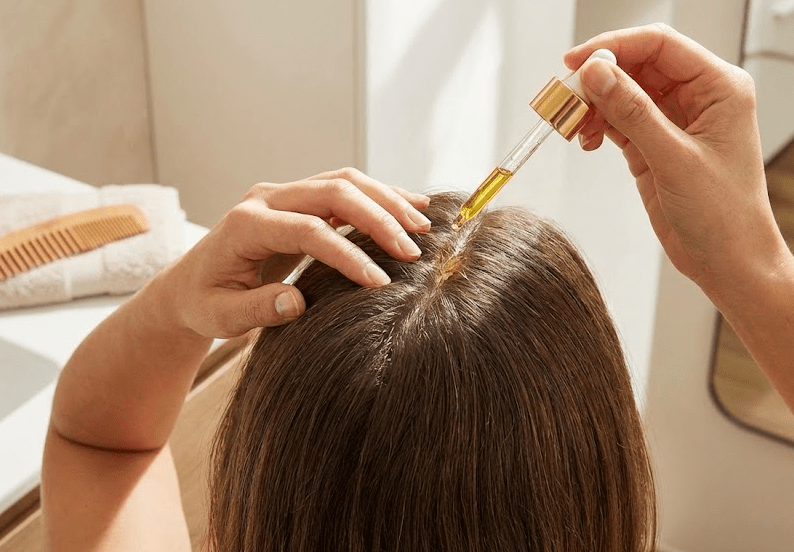
Scalp oiling has been a tradition in many cultures for generations — but does it actually help your hair grow, or can it do more harm than good?
If you’ve ever wondered whether you should oil your scalp, the real answer is:
👉 It depends on your scalp type and your hair needs.
Let’s break it down.
🌿 What Does Scalp Oil Actually Do?
Scalp oiling can provide benefits like:
-
Moisturizing a dry scalp
-
Strengthening the hair follicle
-
Reducing flakes
-
Improving shine and smoothness
-
Preventing breakage
-
Boosting blood circulation (when massaged in)
But not every scalp needs oil, and using it incorrectly can cause build up, itching, or even hair loss.
🧴 Should YOU Oil Your Scalp? (By Scalp Type)
1. If You Have a Dry or Flaky Scalp → YES
A dry scalp lacks natural oils, which makes it tight, itchy, and flaky.
Oiling Helps Because:
-
It restores moisture
-
Reduces irritation
-
Nourishes the skin
Best Oils:
-
Jojoba oil (closest to natural sebum)
-
Castor oil (very nourishing)
-
Rosemary oil (stimulates follicles)
Use 1–2× a week.
2. If You Have an Oily, Greasy Scalp → NO
Oily scalps already produce too much sebum.
Adding more oil creates:
-
Buildup
-
Clogged follicles
-
Greasy roots
-
Faster itching
-
Possible hair shedding
Instead:
Use a clarifying shampoo weekly and avoid heavy oils on the scalp.
3. If You Have Dandruff → SOMETIMES
Not all dandruff is caused by dryness.
If you have dry dandruff:
✔ Oil helps
✔ Use lightweight, soothing oils
If you have oily dandruff or fungal flakes:
✘ Oil makes it WORSE
✘ Use a medicated or anti-fungal shampoo instead
When dandruff sticks to the scalp in thick patches, oil can create a “moist environment” that feeds yeast growth.
4. If You Have Protective Styles (Braids, Weaves, Wigs) → LIGHT OILING ONLY
Your scalp can get dry under protective styles, so light oiling helps — but overdoing it causes buildup.
Rules:
-
Use a nozzle-tip oil
-
Apply only on visible scalp lines
-
Use a lightweight formula
-
Avoid heavy castor oil while braided
2–3 times per week is enough.
🌱 The Truth: Oils Do NOT Make Hair Grow — They Support Growth
Oils don’t magically grow hair.
What they do is:
-
Reduce breakage
-
Protect the scalp
-
Improve blood flow during massage
-
Strengthen the hair barrier
-
Reduce dryness & irritation
Healthy scalp = better growth.
🌬 When You Should NOT Oil Your Scalp
Avoid scalp oiling if you have:
✘ Oily scalp
✘ Fungal dandruff
✘ Severe buildup
✘ Very fine, easily greasy hair
✘ Scalp psoriasis (consult dermatology first)
In these situations, oil does more harm than good.
✨ How to Properly Oil Your Scalp
-
Start with a clean scalp
-
Section your hair
-
Apply small drops directly to scalp
-
Massage for 2–5 minutes
-
Avoid your roots becoming greasy
-
Wash regularly (especially if using heavier oils)
Bonus: Use warm oil for deeper penetration.
📌 Final Verdict: Should You Oil Your Scalp?
The real answer:
➡ Yes, if your scalp is dry or in protective styles
➡ No, if your scalp is oily or dandruff is fungal-based
➡ Yes, for natural hair — but in moderation
➡ No, if buildup and itching increase after oiling
Once you match your routine to your scalp type, your hair will stay healthier, softer, and grow stronger.