
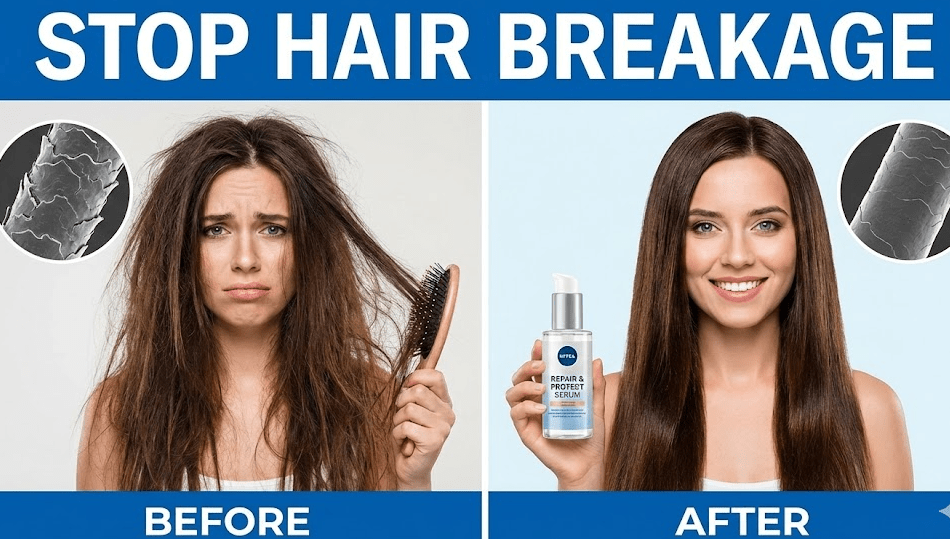
Hair breakage can make your strands look thin, frizzy, and uneven — especially when the ends keep snapping off before you can grow any length. The good news? Most breakage is fixable once you understand what’s causing it.
Here’s everything you need to know about why your hair breaks, the best fixes, and a simple routine to strengthen your strands every day.
What Is Hair Breakage?
Hair breakage happens when the hair shaft becomes weak and snaps.
Unlike hair fall (which comes from the root), breakage occurs mid-shaft or at the ends, leading to:
-
Short, uneven pieces
-
Frizzy, rough texture
-
Split ends
-
Difficulty retaining length
1. Common Causes of Hair Breakage
1. Heat Damage
Frequent use of straighteners, curlers, and blow dryers weakens the cuticle and dehydrates the hair.
Signs:
-
Brittle texture
-
No curl pattern left
-
Dry, straw-like ends
2. Chemical Treatments
Bleaching, colouring, relaxing, perming — all of these break the protein bonds that keep your hair strong.
Signs:
-
Extreme dryness
-
Elastic, stretchy hair when wet
-
Breaks easily during combing
3. Over-Washing & Harsh Shampoos
Sulfates and frequent washing strip natural oils that protect your hair, leaving it fragile.
4. Tight Hairstyles
Constant tension from braids, ponytails, or extensions weakens hair and causes snapping.
5. Not Enough Moisture or Protein
Hair needs a balance of hydration and protein. Too little of either leads to breakage.
-
Low moisture: hair feels dry, rough
-
Low protein: hair feels gummy or too stretchy when wet
6. Wrong Tools & Bad Hair Habits
-
Brushing wet hair aggressively
-
Using cheap brushes with sharp bristles
-
Sleeping on cotton pillowcases
-
Using Towel hair roughly
These habits weaken the cuticle and cause breakage over time.
Fix Hair Breakage :
1. Trim Your Split Ends
If the ends are already split, cutting them is the only real fix.
This prevents the split from traveling up the hair shaft.
2. Add Moisture Back
Use hydrating products to restore softness and flexibility.
-
Deep conditioning masks (1–2x a week)
Look for ingredients like glycerine, aloe vera, shea butter, coconut oil, argan oil.
3. Strengthen with Protein
Protein treatments rebuild weakened hair.
Use:
-
Protein-based deep conditioners
Use protein sparingly (once every 2–4 weeks) to avoid stiffness.
4. Reduce Heat Styling
-
Air dry when possible
-
Use heat tools at lower temperatures
-
Always apply heat protectant
5. Switch to Protective Styling
Loose braids, buns, wigs, and satin-lined styles minimize tension and friction.
6. Use Gentle Tools
-
Microfiber towel or soft cotton T-shirt
-
Satin pillowcases
3. A Daily Routine to Prevent Hair Breakage
Here’s an easy routine you can recommend to customers or use yourself:
Morning Routine
1. Hydrate
Spritz hair with a hydrating mist or water.
Apply a light leave-in conditioner to soften and protect the strands.
2. Seal the Ends
Apply a small amount of hair serum or lightweight oil (argan, jojoba, grapeseed).
3. Gentle Detangling
Use a wide-tooth comb, starting from ends and working upward.
Night Routine
1. Moisturize Ends
Apply a tiny bit of leave-in or oil to the ends if they feel dry.
2. Protect While Sleeping
-
Satin pillowcase
-
Loose braids or pineapple for curls
Weekly Routine
1. Deep Condition
Use a moisturizing mask once a week.
2. Protein Treatment (Every 2–4 Weeks)
To rebuild strength and reduce breakage.
3. Avoid Heat for Most Days
Heat-free styles reduce cumulative damage.
When to Seek Professional Help
If your hair is:
-
Breaking excessively
-
Looks like “spaghetti” when wet
-
Snapping even after treatments
-
Over-processed from bleach or relaxers
A stylist may suggest:
-
Bond-rebuilding salon treatments
-
Professional trims
-
Toning or colour-corrective procedures
Final Thoughts
Hair breakage can be frustrating, but with the right routine and a few simple habit changes, you can restore strength, shine, and elasticity. The key is consistent moisture, balanced protein, and gentle handling.