
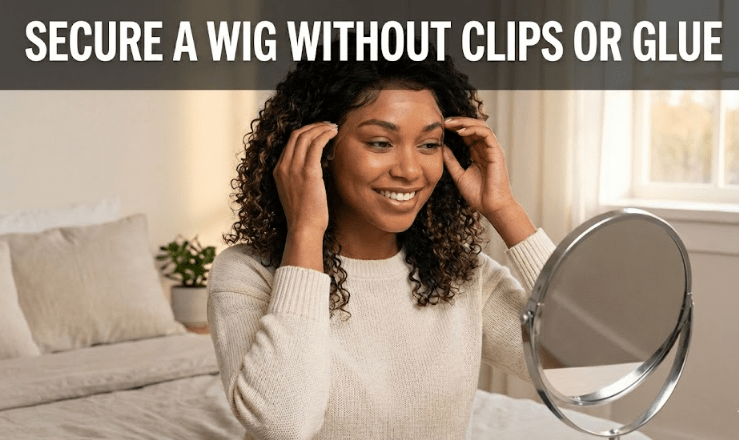
Not everyone wants to use clips or glue to secure a wig—and that’s completely okay. Whether you have a sensitive scalp, hair loss, or just want a quick, damage-free install, there are several effective ways to keep your wig secure without clips or adhesive.
Here’s how to do it the right way.
Why Avoid Clips or Glue?
Many people skip clips and glue because they can:
-
Cause scalp irritation or itching
-
Pull on natural hair and edges
-
Feel uncomfortable during long wear
-
Require extra time to remove safely
Going clip-free and glue-free can be gentler, faster, and more beginner-friendly.
1. Use an Adjustable Wig Strap
Most modern wigs come with built-in adjustable straps at the back.
How it helps:
-
Customizes the fit
-
Prevents slipping
-
Keeps the wig snug all day
Tip: Tighten gradually—too tight can cause headaches.
2. Wear a Wig Grip Band
A wig grip is one of the most secure, no-damage options available.
Why it works:
-
Creates friction to stop movement
-
Works with or without hair
-
Comfortable for all-day wear
Wear it over a wig cap or directly on the scalp.
3. Choose the Right Wig Size
An ill-fitting wig will move no matter what.
Measure before buying:
-
Head circumference
-
Ear-to-ear
-
Front-to-nape
A properly sized wig stays in place naturally.
4. Use a Wig Cap for Extra Hold
Wig caps help grip the scalp and flatten natural hair.
Best options:
-
Velvet wig caps (extra grip)
-
Nylon caps (smooth and lightweight)
Make sure the cap fits snug but not tight.
5. Opt for Lace Front or Full Lace Wigs
Lace wigs conform better to the head and sit flatter than bulky caps.
Why they’re better without glue:
-
Lightweight
-
Flexible fit
-
Natural hairline appearance
Some lace wigs even stay secure using just straps and a wig grip.
6. Silicone Wig Bands (For Hair Loss)
Silicone-lined bands are perfect for people with little to no hair.
Benefits:
-
Medical-grade grip
-
No slipping
-
Gentle on sensitive scalps
Ideal for alopecia or chemotherapy patients.
7. Style Smart for Stability
Certain styles hold better without glue.
Best styles:
Very long or heavy wigs may need extra support.
8. Keep the Scalp Clean & Oil-Free
Oily skin causes slipping.
Before wearing:
-
Clean scalp
-
Avoid heavy oils or creams
-
Let skin dry completely
Dry skin improves grip.
Common Mistakes to Avoid
-
Wearing the wrong wig size
-
Skipping wig grip or cap
-
Overtightening straps
-
Applying oils under the wig
-
Choosing very heavy wigs without support
Quick No-Glue Wig Security Checklist
✔ Proper wig size
✔ Adjustable straps tightened
✔ Wig grip or velvet band
✔ Snug wig cap
✔ Clean, dry scalp
Final Thoughts
You don’t need clips or glue to wear a wig confidently. With the right fit, grip tools, and smart styling choices, your wig can stay secure, comfortable, and damage-free all day.
Secure wigs start with smart foundations—not adhesives.