
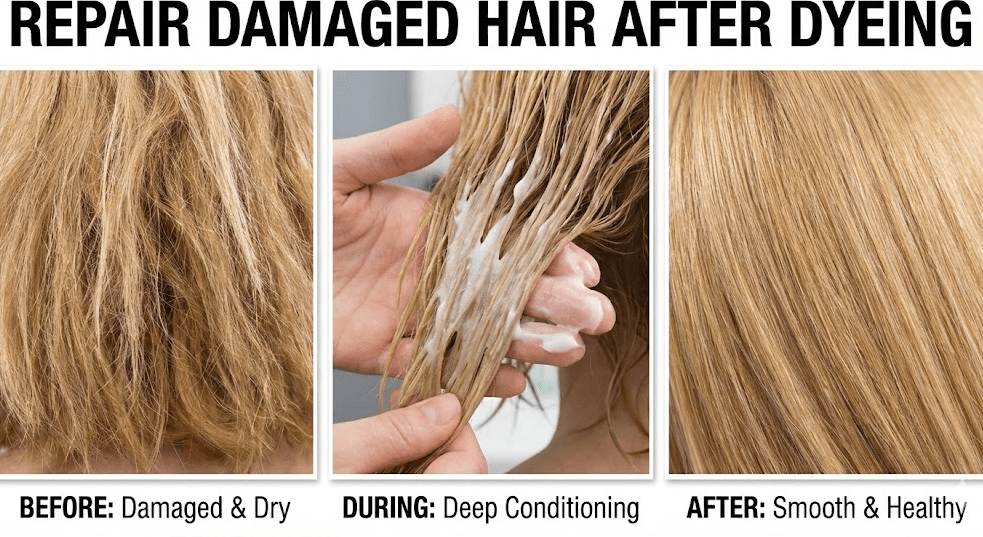
Colouring your hair can instantly transform your look — but it can also leave your strands dry, brittle, or dull if not cared for properly. Whether you bleached for a bold blonde or used a permanent dye for richer colour, your hair needs extra love afterward.
Here’s a complete guide to repairing dye-damaged hair so it feels soft, strong, and healthy again.
1. Start With a Bond-Repair Treatment
Hair dye (especially bleach) breaks protein bonds inside the hair shaft. When these bonds weaken, hair becomes fragile, frizzy, and more prone to breakage.
What to use:
-
A bond-building treatment (like Olaplex-type formulas)
-
Strengthening masks with amino acids, keratin, or protein
How it helps:
-
Rebuilds hair structure
-
Reduces breakage
-
Restores elasticity
Use 1–2 times weekly for the first month.
2. Switch to a Moisturizing Shampoo & Conditioner
Dyeing strips the hair of its natural oils, so your usual products won’t cut it anymore.
Look for:
-
Sulfate-free shampoo (keeps colour from fading faster)
-
Deep-moisture conditioner with shea butter, coconut oil, or argan oil
Avoid:
-
Clarifying shampoos (too harsh on freshly dyed hair)
-
Products with high alcohol content
3. Deep Condition Weekly (Non-Negotiable!)
Deep conditioning restores softness and elasticity — essential after chemical processing.
How to do it:
-
Apply a moisturizing mask from mid-lengths to ends
-
Cover with a plastic cap
-
Leave on for 15–30 minutes
-
Rinse with cool water to seal the cuticle
Do this once a week consistently.
4. Trim the Damaged Ends
Even with the best products, severely split ends cannot be repaired.
Why trimming helps:
-
Prevents splits from traveling up the hair shaft
-
Helps hair look smoother and healthier
-
Makes styling easier
A small “dusting” trim every 6–8 weeks is enough.
5. Reduce Heat Styling (or Protect Before You Use)
Heat can worsen the dryness and breakage caused by dyeing.
If you must use heat:
-
ALWAYS apply a heat protectant spray
-
Keep tools below 350°F / 175°C
-
Avoid using heat daily
Try air-drying, roller sets, or heatless curls instead.
6. Use Oils to Lock in Moisture
Oils don’t hydrate the hair — but they do seal in the moisture your conditioners provide.
Great options:
-
Argan oil (adds shine)
-
Coconut oil (penetrates deeply)
-
Jojoba oil (closest to natural sebum)
-
Castor oil (thicker, strengthens ends)
Apply to damp hair for best results.
7. Protect Your Hair While Sleeping
Night time friction can worsen damage.
Switch to:
-
A satin or silk bonnet
-
Satin pillowcase
Benefits:
-
Less frizz
-
Reduced breakage
-
Longer-lasting moisture
8. Space Out Your Colour Sessions
Your hair needs time to recover after being chemically processed.
Safe timing:
-
Wait 6–8 weeks for regular dye
-
Wait 10–12 weeks for bleach or heavy lifting
Touch up roots instead of recolouring the entire head.
9. Try Protein-Moisture Balance Treatments
Dye-damaged hair often lacks both protein and moisture.
Signs you need protein:
-
Hair feels mushy when wet
-
Hair breaks easily
-
Curls look limp
Signs you need moisture:
-
Hair feels rough or dry
-
Hair tangles easily
-
Ends feel crispy
Alternate protein and moisture weekly until your hair feels balanced again.
Final Tips for Healthy, Post-Dye Hair
-
Don’t wash too often — 1–2 times per week is ideal
-
Avoid tight ponytails or styles that add tension
-
Drink water and maintain a good diet (hair health starts inside!)
-
Be consistent — repairing damaged hair takes time