
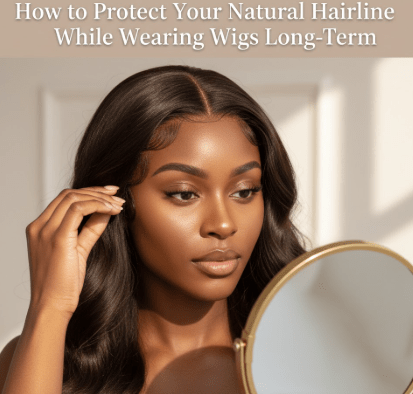
Wigs are one of the best protective styles—but only if your hairline is actually protected. Long-term wig wear without the right habits can lead to thinning edges, tension breakage, and slow regrowth.
The good news? You can wear wigs regularly without sacrificing your natural hairline. Here’s how to do it the right way.
Why Wigs Can Damage Your Hairline (If You’re Not Careful)
Hairline damage usually comes from:
-
Constant tension from tight wig bands
-
Improper wig placement
-
Excessive glue or adhesive
-
Dry, neglected edges under the wig
-
Wearing wigs for too long without breaks
Protecting your hairline isn’t about stopping wig use—it’s about wearing them smarter.
1. Choose Hairline-Friendly Wig Types
Not all wigs are equal when it comes to edge protection.
✔ Best Options:
-
Glueless wigs with adjustable straps
-
Closure wigs (less lace tension)
-
Lightweight lace front wigs
❌ Be Cautious With:
-
Full lace wigs worn daily
-
Heavy-density wigs (200%+)
-
Wigs with tight elastic bands
💡 The less tension on your edges, the safer your hairline.
2. Never Skip a Wig Cap (But Choose the Right One)
A wig cap creates a barrier between your edges and the wig.
Best wig cap materials:
-
Satin or silk-lined caps
-
Breathable mesh caps
Avoid:
-
Rough nylon caps
-
Caps that slide and pull at your edges
💡 Your wig cap should protect—not compress—your hairline.
3. Prep Your Edges Before Wearing a Wig
Dry edges are weak edges.
Before installing your wig:
-
Lightly moisturize your hairline
-
Seal with a lightweight oil or edge serum
-
Avoid heavy gels on your real edges
This keeps your hairline flexible and reduces breakage.
4. Skip Glue on Your Actual Edges
One of the fastest ways to lose edges is applying adhesive directly onto them.
Do this instead:
-
Apply glue slightly in front of your hairline
-
Use wig grip bands for security
-
Choose glueless installs for daily wear
💡 Glue should never live on your real hair.
5. Avoid Daily Tight Installs
Your wig should feel secure—not tight.
Signs your wig is too tight:
-
Headaches
-
Redness around the hairline
-
Tingling or soreness
If you feel tension, resize your wig or loosen the straps immediately.
6. Give Your Hairline Regular Breaks
Even protective styles need breaks.
Best practice:
-
Remove wigs at night whenever possible
-
Rotate between wigs and low-tension styles
-
Take at least 1–2 wig-free days weekly
💡 Your edges need oxygen and rest to thrive.
7. Clean & Care for Your Hairline Weekly
Product build up under wigs can weaken your hairline.
Weekly routine:
-
Clean edges gently with a damp cloth or micellar water
-
Moisturize after cleansing
-
Massage lightly to encourage circulation
This keeps follicles healthy and prevents thinning.
8. Sleep Smart to Save Your Edges
Sleeping in wigs increases friction and tension.
If you must sleep in a wig:
-
Use a satin scarf or bonnet
-
Avoid tight elastic bands
-
Remove glue-based wigs before bed
💡 Nighttime protection matters just as much as daytime care.
9. Watch for Early Warning Signs
Early signs of hairline stress include:
-
Short, broken hairs along edges
-
Soreness or itching
-
Thinning at the temples
Catching damage early makes recovery much easier.
Final Takeaway: Wigs Should Protect—Not Punish—Your Hairline
Wearing wigs long-term doesn’t mean sacrificing your natural hairline. With the right wig type, proper prep, and low-tension habits, your edges can stay full, healthy, and growing.
👉 Protect your hairline now—your future hair will thank you.