
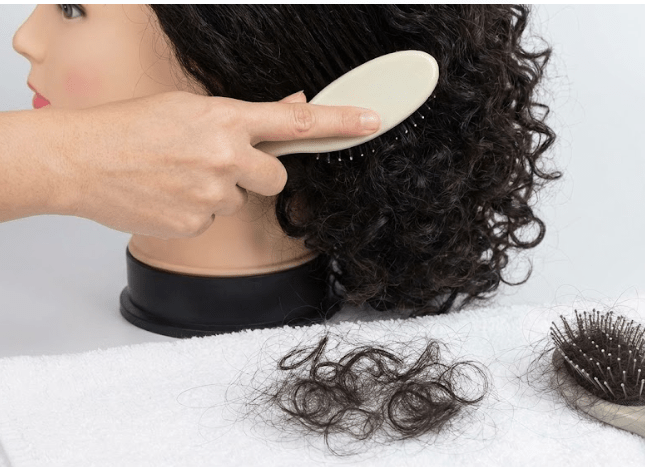
Wig shedding is completely normal — but excessive shedding? Not so much.
Whether you wear synthetic or human hair wigs, some strands will fall out over time. But with the right care routine, you can dramatically reduce shedding and extend your wig’s lifespan.
Here’s everything you need to know to keep your units full, healthy-looking, and long-lasting.
✨ Why Wigs Shed in the First Place
Before fixing the issue, it helps to understand the causes:
-
Over-plucking the lace
-
Brushing or detangling incorrectly
-
Using harsh shampoos or hot water
-
Installing with too much glue or removing glue roughly
-
Excessive heat styling
-
Sleeping without protection
-
Low-quality construction
Now let’s talk about how to prevent it.
🔥 1. Be Gentle When Detangling
This is the number one cause of wig shedding.
How to detangle without causing damage:
-
Always start from the ends, working upward.
-
Use a wide-tooth comb or wig brush — never a paddle brush on curly hair.
-
Detangle on damp, not soaking wet hair.
-
Apply a lightweight leave-in conditioner or detangling spray first.
Tip: For curly units, finger-detangling works best.
🔥 2. Stop Over-Plucking the Lace
Plucking creates a natural hairline — but overdoing it weakens the knots, causing shedding near the front.
Do it right:
-
Pluck slowly and in small sections.
-
Never pluck straight across the same area repeatedly.
-
Avoid plucking when the lace is wet (wet knots loosen more easily).
If your wig already has a pre-plucked hairline, keep extra plucking to a minimum.
🔥 3. Wash With the Right Products
Regular shampoos can be too harsh and strip moisture from the hair, leading to breakage.
Use:
-
Lukewarm water (never hot)
Avoid:
-
Strong clarifying shampoos
-
Hot water
-
Rubbing the hair aggressively
Always gently squeeze out water — never twist or wring the hair.
🔥 4. Seal the Knots for Extra Protection
This step makes a HUGE difference, especially if you wear your wigs often.
Use a knot sealer spray on the inside of the lace to strengthen the knots and reduce shedding around the hairline and parting.
Let it dry completely before wearing.
🔥 5. Minimize Heat Styling
Heat breaks down the cuticle (on human hair) and melts fibers (on synthetic wigs).
Better options:
-
Use heat tools on low to medium settings only.
-
Choose heat-friendly synthetic wigs if you plan to style often.
-
Opt for rollers, flexi rods, or heatless methods for curls.
Always use a heat protectant spray on human hair wigs.
🔥 6. Install and Remove Carefully
Lace glue and adhesives can pull out hair if not handled correctly.
When installing:
-
Use a thin, even layer of glue or gel.
-
Avoid dragging the lace while adjusting.
When removing:
-
Always use a proper adhesive remover.
-
Let it sit for a minute to break down the glue.
-
Gently lift the lace — never rip or tug.
This alone prevents tons of unnecessary shedding.
🔥 7. Sleep With Protection
Never sleep with your wig on unprotected.
Use:
-
A satin or silk bonnet
-
OR tie the wig into a loose low ponytail and wrap it with a silk scarf
Sleeping without protection causes friction, tangling, and eventually shedding.
🔥 8. Store Your Wig Properly
When you're not wearing it:
-
Keep it on a wig stand
-
Keep away from heat and direct sunlight
-
Cover with a silk/satin bag to prevent dust and friction
Good storage = longer life.
🔥 9. Choose Higher-Quality Wigs
All wigs shed, but low-quality ones shed faster and more aggressively.
Look for:
-
Double-weft construction
-
Knots that are bleached properly (not over-processed)
-
Strong lace
-
Secure stitching
A well-made wig dramatically reduces shedding.
✨ Final Thoughts
Shedding is normal — but you can totally control it.
By being gentle, using the right products, and caring for your unit properly, your wig will stay fuller, smoother, and last much longer.