
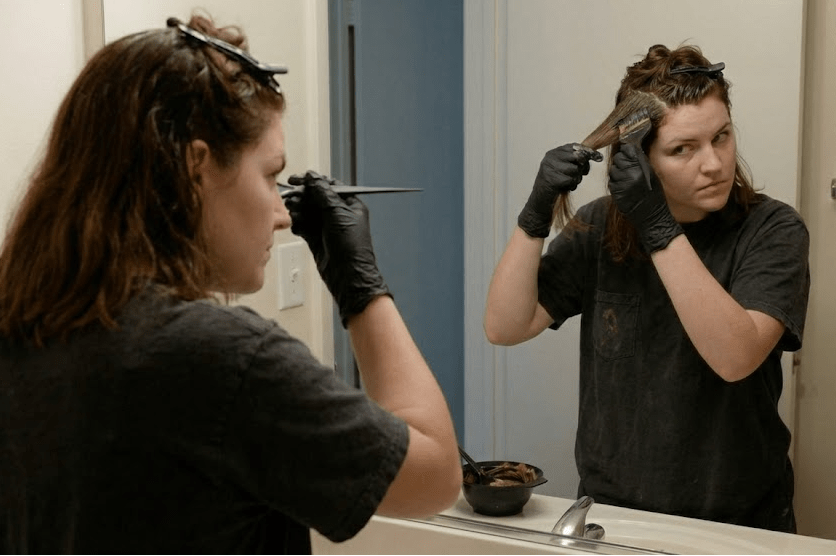
Dyeing your hair at home can save money, time, and give you the freedom to try new colours whenever you want. But let’s be real — it can also go terribly wrong if you don’t prep correctly. Dryness, breakage, patchy colour, and fried ends are usually the result of rushing the process or using the wrong products.
The good news? You can absolutely dye your hair at home safely — without damage — as long as you follow the right steps.
Here’s your complete guide.
🔥 Step 1: Choose the Right Type of Dye
Some dyes are gentler and safer than others.
Semi-Permanent Dye (Safest Option)
-
No ammonia
-
No developer
-
Sits on top of the hair shaft
-
Adds shine
-
Best for: fun colours, adding depth, refreshing faded colour
Minimal to no damage.
Permanent Dye (Use With Caution)
-
Contains ammonia + higher developer
-
Lifts natural colour and deposits new pigment
-
Longer-lasting
-
Can cause dryness & breakage if overused
Use only if you need drastic colour change.
🔥 Step 2: Prep Your Hair Properly
Healthy hair takes colour better. Damaged hair gets patchy, frizzy, or breaks.
Do This Before Dyeing:
✔ Deep condition 2–3 days before
✔ Detangle thoroughly
✔ Make sure your hair is dry, not damp
✔ Avoid heat styling for a week prior
✔ Do a strand test to check the final colour
Don’t Do This Before Dyeing:
✘ Don’t dye dirty, product-loaded hair
✘ Don’t trim right before dyeing (colour may irritate fresh ends)
✘ Don’t use heavy oils or butters right before colouring
🔥 Step 3: Gather the Right Tools
You’ll need:
-
Old T-shirt or towel
-
Timer
-
Vaseline (for hairline protection)
Having everything ready prevents mistakes.
🔥 Step 4: Protect Your Hairline & Skin
Before applying dye, coat your:
-
Edges
-
Ears
-
Neck
-
Hairline
…with petroleum jelly (Vaseline) or thick balm.
This prevents staining and irritation.
🔥 Step 5: Section Your Hair
Split your hair into 4–6 sections.
This ensures:
-
Even colour
-
No patchy spots
-
Faster application
-
Less tangling
Work one section at a time.
🔥 Step 6: Apply the Dye the Right Way
Here’s the best order:
1. Apply to mid-lengths + ends first
These areas are older and more resistant to colour.
2. Apply to the roots last
Roots process faster due to scalp heat.
3. Saturate the hair fully
Dry or frizzy hair needs more product — don’t be scared to apply generously.
🔥 Step 7: Follow the Processing Time (No More!)
Set a timer exactly as the box or dye tube recommends.
Leaving colour on longer does not make it stronger — it only causes:
-
Dryness
-
Breakage
-
Over-processing
Stick to the recommended time.
🔥 Step 8: Rinse Properly
Rinse with lukewarm water until the water runs clear.
Then use:
✔ A colour-safe shampoo (if the dye instructions require it)
✔ A rich deep conditioner or colour-safe mask
Your hair just went through a chemical process — give it moisture.
🔥 Step 9: Post-Dye Care to Prevent Damage
This is where most people go wrong.
After dyeing your hair:
For the next 1–2 weeks:
✔ Avoid heat styling
✔ Deep condition weekly
✔ Use colour-safe, sulfate-free shampoo
✔ Apply leave-in conditioners
✔ Use lightweight oils to seal moisture
✔ Sleep with a satin/silk bonnet
Don’t:
✘ Bleach again
✘ Re-dye too soon
✘ Use heavy protein treatments immediately (wait for 1 week)
🔥 Pro Tips for Safe Dyeing At-Home
1. Never apply permanent dye to previously coloured hair
This causes overlapping → major breakage.
2. If going lighter, use bleach carefully
Lift slowly and always deep condition after.
3. If going darker, you can use semi or demi permanent
Healthier + shinier.
4. Avoid dyeing over heat-damaged hair
Trim split ends first.
5. Always do a strand test
It saves you from disasters.
🔥 When You Shouldn’t Dye at Home
Consider a professional if:
-
You want platinum blonde
-
You have box-dye build up
-
Your hair is severely damaged
-
You want balayage or highlights
-
You want drastic colour correction
These require technique and controlled timing.
✨ Final Thoughts
Dyeing your hair at home can be safe and successful — as long as you prep properly, use the right dye, and care for your hair afterward. Remember: gentle products, proper sectioning, and hydration are key to protecting your strands.