
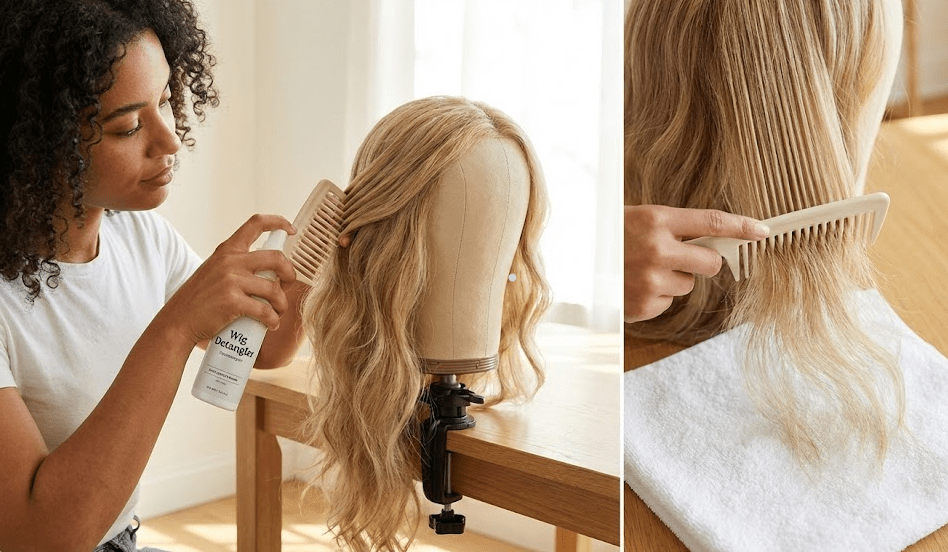
Shedding is one of the biggest frustrations wig wearers face — especially when detangling. Whether it's curly, straight, synthetic, or human hair, improper detangling can cause breakage, thin out your wig, and shorten its lifespan.
The good news? With the right techniques and tools, you can detangle your wig smoothly, safely, and shed-free. Here's your complete guide.
✨ Why Wigs Get Tangled
Before you start detangling, it helps to understand WHY tangling happens:
-
Product build up
-
Dryness or lack of moisture
-
Excessive friction from clothing or sleeping
-
Improper storage
-
Not combing from ends to roots
Identifying the cause prevents future tangles — and shedding.
✨ What You’ll Need
To detangle your wig safely, make sure you have:
-
Wig-friendly detangling spray or leave-in conditioner
-
Wig brush (loop brush or paddle brush for straights)
-
Spray bottle with water
-
Patience — never rush!
✨ Step-by-Step: How to Detangle Your Wig Without Shedding
1. Start on Dry, Not Wet, Hair
Wet hair — especially wigs — is more fragile and prone to breakage.
Start with a wig that is dry or lightly misted, not soaked.
2. Place the Wig on a Head or Hold It Securely
Detangling is easier and gentler when the wig is stable.
Use a mannequin head, wig stand, or hold the wig by the cap to avoid pulling on the lace or tracks.
3. Divide the Wig Into Sections
Working in sections:
-
Reduces tension
-
Improves control
-
Helps you focus on smaller areas
-
Prevents unnecessary pulling
For curly wigs, make smaller sections.
For straight wigs, medium sections work well.
4. Apply a Detangling Spray or Leave-In Conditioner
This adds slip, making brushing easier and reducing breakage.
Spray lightly from mid-shaft to ends.
Avoid spraying directly on the lace to prevent buildup.
5. Start at the Ends — Always
The golden rule: Ends first, roots last.
Detangle:
-
Ends
-
Mid-shaft
-
Roots
This prevents tightening knots and reduces shedding dramatically.
6. Use a Wide-Tooth Comb or Loop Brush
Choose based on wig type:
-
Curly & Deep Wave: Wide-tooth comb or fingers
-
Straight or Body Wave: Paddle brush or loop wig brush
Loop brushes are especially wig-friendly because they don’t snag wefts or tangle lace.
7. Be Gentle, Use Short Strokes
Slow, short strokes remove tangles without stressing the cap.
Avoid dragging the comb from root to tip in one pull — this is the #1 cause of shedding.
8. Detangle the Nape Area Last
The nape tangles the most because of friction from skin and clothing.
Be extra gentle here, and apply additional leave-in if needed.
9. Rinse Only If Necessary
If you used a lot of product or your wig feels heavy:
-
Rinse with cool water
-
Apply conditioner
-
Detangle again while conditioner is in
-
Rinse and air dry
Never twist or wring the hair.
10. Let the Wig Air Dry Fully
Use a wig stand to dry. Avoid blow-drying unless necessary.
Air drying:
-
Keeps hair soft
-
Prevents frizz
-
Helps retain moisture
✨ How to Prevent Tangling (and Shedding) in the Future
1. Brush Your Wig Daily
A quick detangle prevents deep knots.
2. Store Your Wig Properly
Use a satin bag, wig stand, or mannequin head.
3. Avoid Sleeping in Your Wig
Friction = tangles + shedding.
4. Keep the Hair Moisturized
Use a lightweight wig-safe conditioner or serum.
5. Limit Heavy Products
Buildup creates sticky tangles.
6. Protect the Nape
Wear satin-lined hoods or scarves in windy weather.
7. Wash Your Wig Regularly
Dirty hair tangles faster — wash every 10–15 wears for human hair, 6–10 for synthetic.
✨ Final Thoughts
Detangling your wig doesn’t have to mean losing precious strands. With the right products, gentle techniques, and consistent care, you can keep your wig:
-
Smooth
-
Full
-
Tangle-free
-
Long-lasting
Whether you wear your wig daily or occasionally, mastering proper detangling will protect your investment and keep your styles looking fresh.