
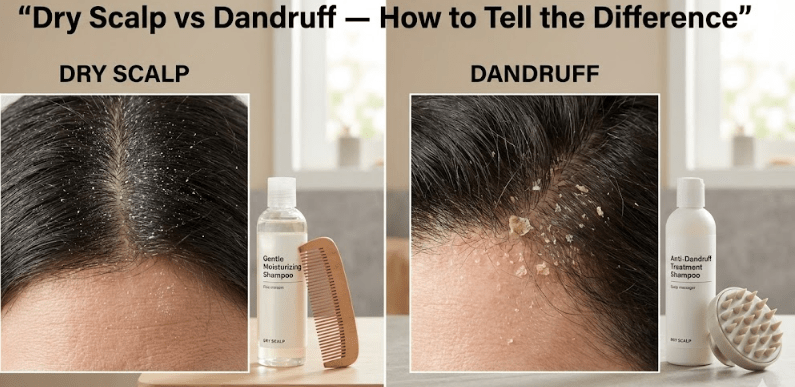
Flakes on your scalp can be frustrating — and confusing. Many people assume all flakes are dandruff, but dry scalp and dandruff are not the same thing. Treating the wrong condition can actually make the problem worse.
Here’s how to tell the difference between dry scalp and dandruff — and how to treat each correctly.
What Is a Dry Scalp?
A dry scalp happens when your skin lacks moisture, similar to dry skin anywhere else on the body.
Common Causes of Dry Scalp
-
Cold or dry weather
-
Washing hair too often
-
Using harsh shampoos
-
Hot showers
Signs of Dry Scalp
-
Small, white flakes
-
Tight, itchy scalp
-
Dryness without redness
-
Flakes fall easily onto shoulders
What Is Dandruff?
Dandruff is a scalp condition caused by excess oil and an overgrowth of yeast (Malassezia) on the scalp.
Common Causes of Dandruff
-
Oily scalp
-
Product build up
-
Infrequent washing
-
Hormonal changes
-
Stress
Signs of Dandruff
-
Larger, yellow or white flakes
-
Oily or greasy flakes
-
Itchy scalp with redness
-
Flakes stick to the scalp and hair
How to Treat Dry Scalp
-
Use a gentle, moisturizing shampoo
-
Reduce wash frequency
-
Apply a hydrating scalp serum or oil
-
Avoid hot water
-
Use a humidifier in dry weather
Ingredients to look for:
Aloe vera, glycerine, hyaluronic acid, coconut oil
How to Treat Dandruff
-
Use an anti-dandruff shampoo regularly
-
Wash scalp thoroughly to reduce oil build up
-
Avoid heavy oils on the scalp
-
Massage gently — don’t scratch
Ingredients to look for:
Zinc pyrithione, ketoconazole, salicylic acid, selenium sulfide
What Happens If You Treat the Wrong Condition?
-
Using anti-dandruff shampoo on a dry scalp can make dryness worse
-
Oiling dandruff-prone scalps can increase flakes and itching
Correct diagnosis is key to lasting results.
When to See a Professional
If flakes persist despite treatment or you notice severe redness, scaling, or hair loss, consult a dermatologist. Conditions like psoriasis or fungal infections may need medical care.
Final Thoughts
Dry scalp and dandruff may look similar, but they need very different treatments. Once you know which one you have, managing flakes becomes much easier — and your scalp will feel healthier fast.